
Different problem, different rules
- Palette
Cold Blue, Warm Amber
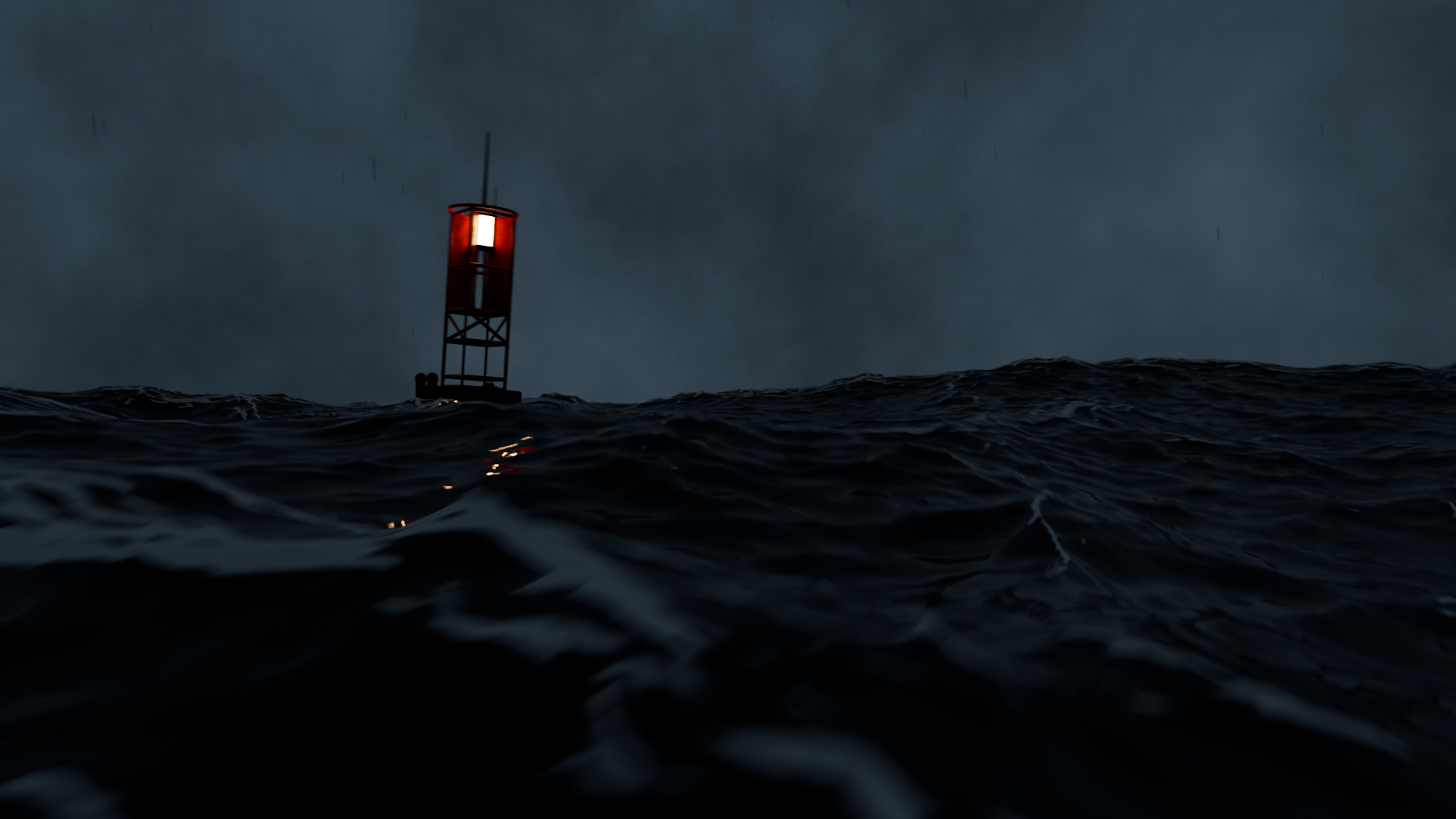
A nearly monochromatic ocean of deep blues and desaturated greys, interrupted by the warm amber glow of a navigation buoy. The contrast draws attention to the only visible structure.
- Light
Isolated Practical
The buoy's beacon acts as the primary visual focal point, its warm illumination contrasting against the dark, overcast environment. Subtle ambient lighting preserves the ocean's silhouette without overpowering the beacon.
- Water
Waves Drive the Composition
Layered ocean waves dominate the foreground, creating depth through overlapping silhouettes and shifting reflections. The low camera angle places the viewer close to the water, emphasizing the scale and movement of the sea.
- Mood
Isolation in Open Water
A lone navigation buoy stands against an endless, storm-darkened ocean. Heavy clouds, subtle rainfall, and minimal visibility create a sense of isolation, with the distant beacon providing the only warmth in the scene.
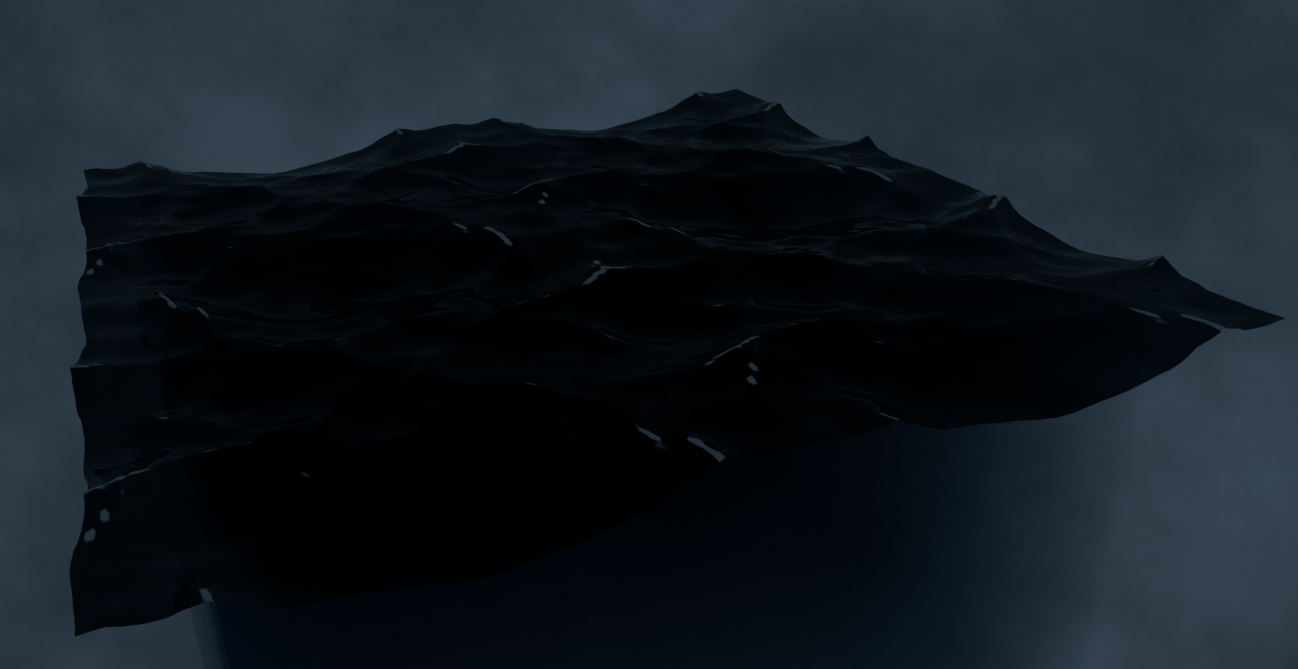
Blockout to final
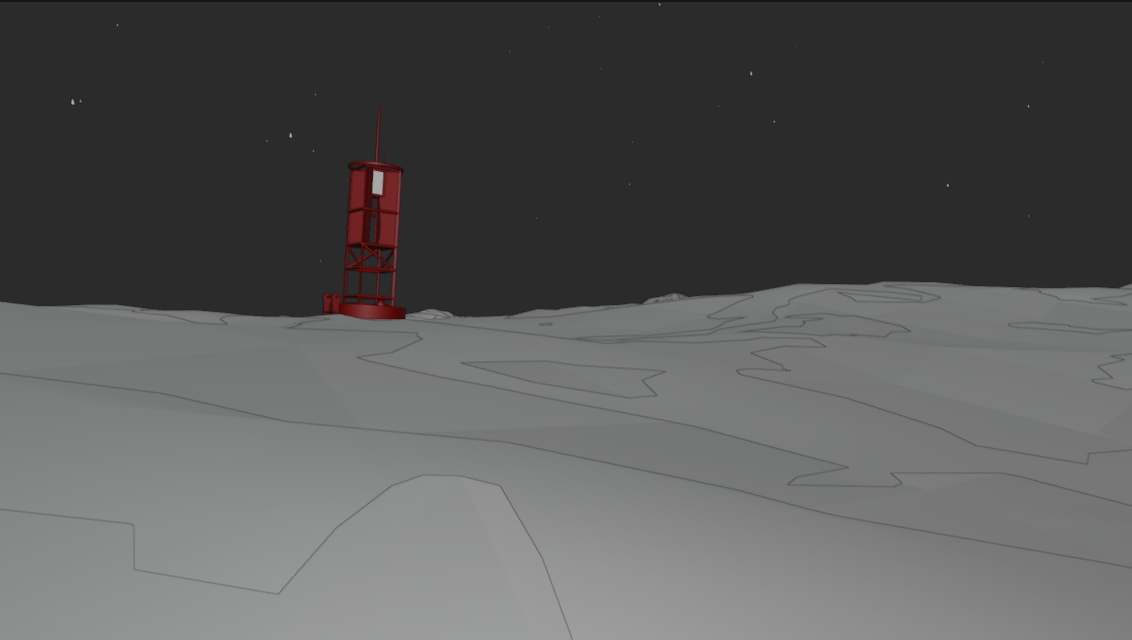
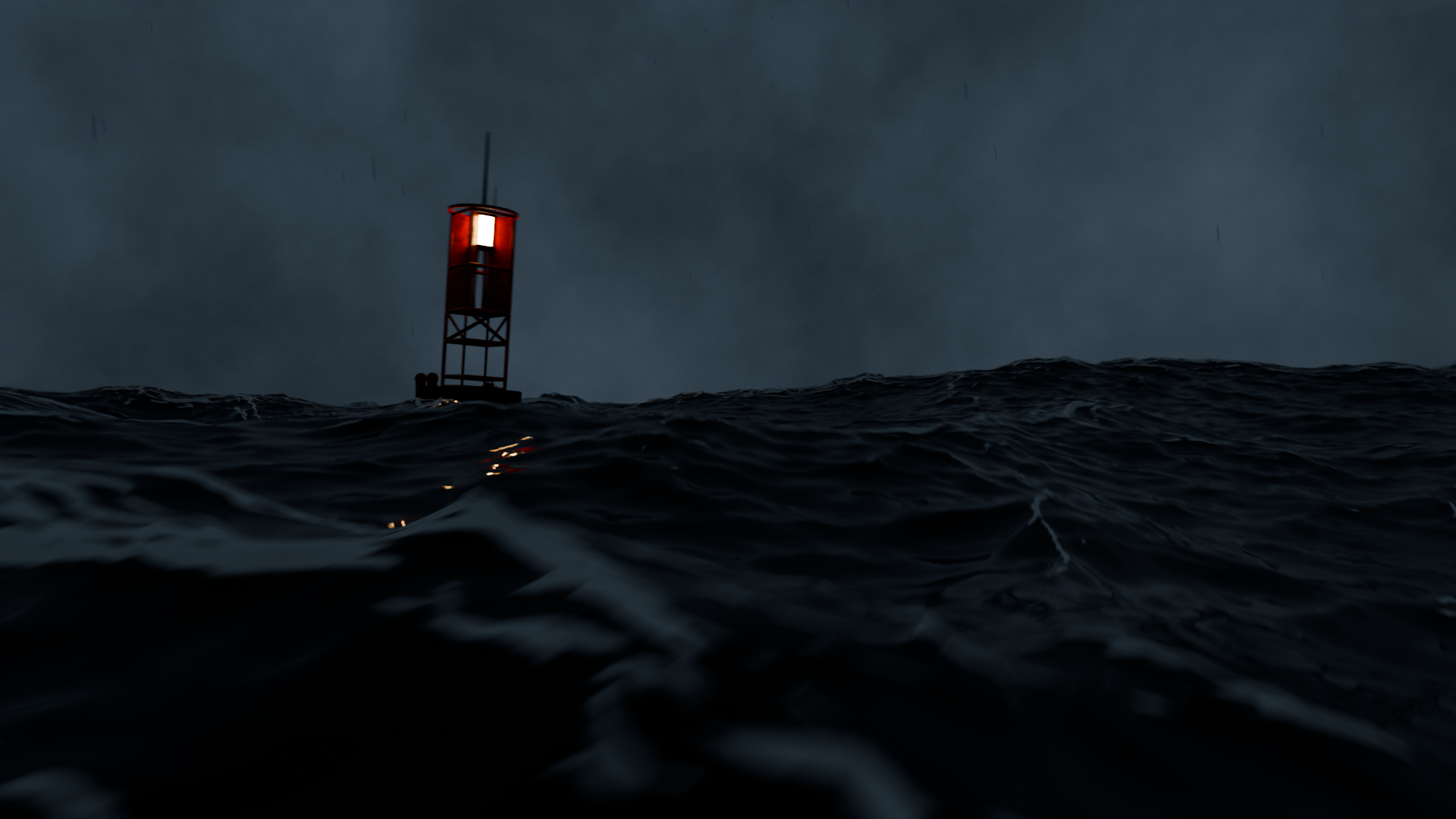 BlockoutFinal
The camera height was fixed at 0.4 m above the water surface to keep the ocean reflections consistently framed throughout the render.
Detail passes
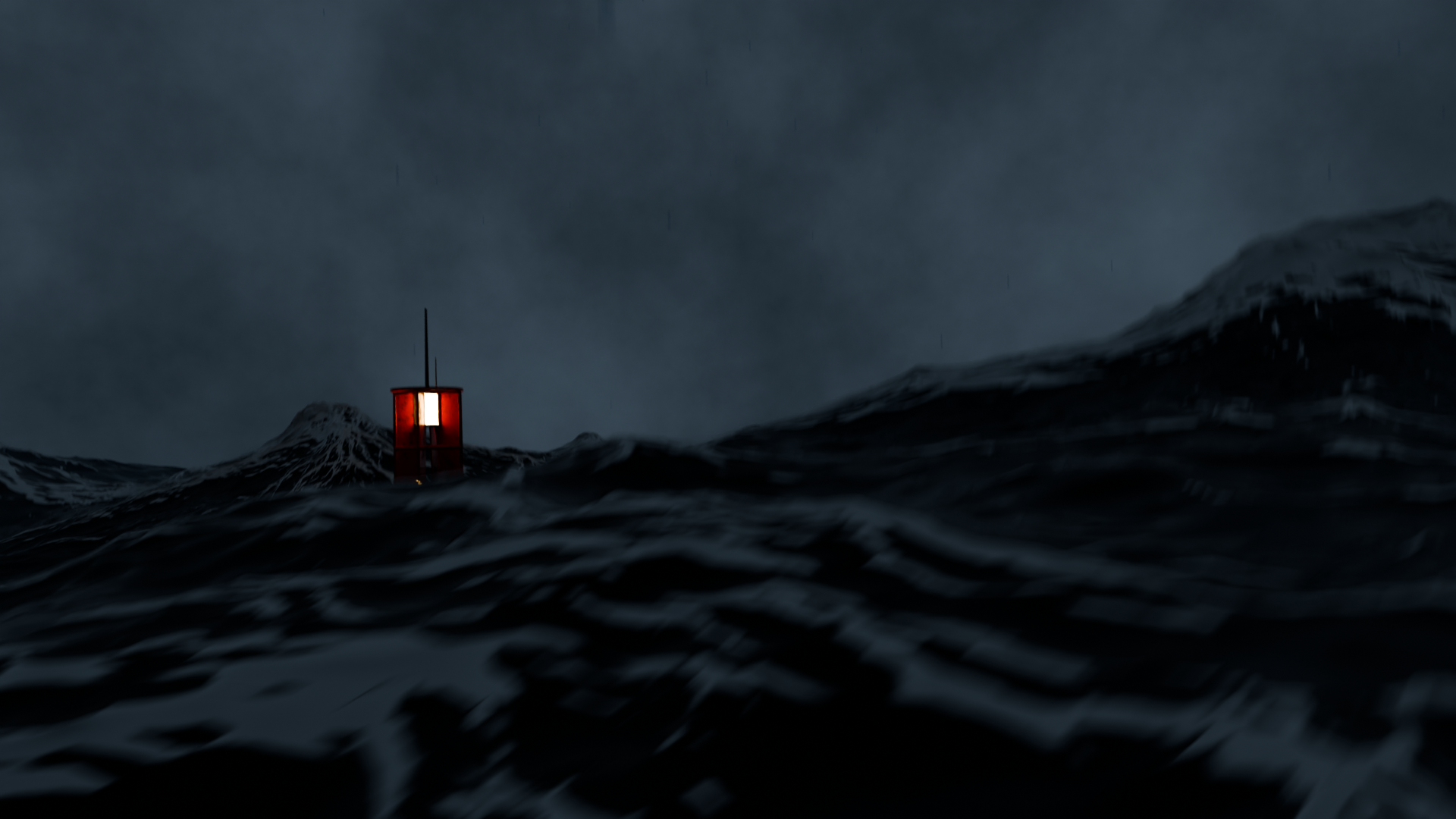
Water & volumetrics
The ocean surface uses Blender's Ocean Modifier to generate procedural waves, with a water shader controlling reflections, transparency, and surface detail.
Volumetric effects introduce atmospheric depth, allowing light to scatter through the environment and creating a softer, more cinematic appearance.